Newsletter Subscribe
Enter your email address below and subscribe to our newsletter

 ByJohn A
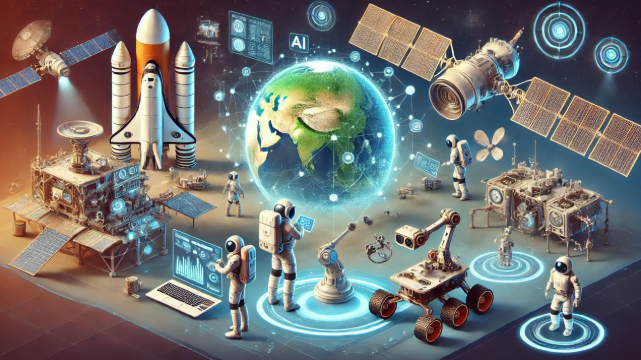
Artificial intelligence is increasingly shaping space exploration by enabling autonomous, data-driven decisions in remote, harsh environments. It enhances rovers and probes with robust perception, adaptive control, and fault-tolerant planning, while telescopes and missions benefit from advanced data fusion and anomaly detection. Cross-cutting concerns—ethics, transparent design, and accountable autonomy—frame risk and governance. As systems grow more capable, the balance between automated insight and human oversight becomes pivotal, inviting careful scrutiny of limits, safety, and mission efficacy.
Artificial intelligence enhances space exploration by enabling autonomous operations, rapid data interpretation, and resilient decision-making in environments where communication delays and harsh conditions limit human oversight.
This capability strengthens remote autonomy as systems operate with minimal ground control, while cognitive perception interprets complex signals.
The result is streamlined mission planning, adaptive anomaly handling, and accelerated scientific insight without compromising safety or agency in exploratory objectives.
See also: needtechhelp
AI-powered rovers and probes harness onboard perception, adaptive control, and fault-tolerant decision making to operate more safely and effectively in remote, harsh environments. Autonomous navigation enables horizon-expanding exploration while minimizing risk, and robust perception sustains operation amid dust, glare, and terrain ambiguity. This disciplined autonomy supports smarter mission planning, resilient science returns, and a future where exploration remains boldly unconstrained.
From data streams to breakthrough insights, AI is reshaping how telescopes and missions extract meaning from the cosmos. Data fusion accelerates discovery, while anomaly detection flags rare events. Robotics autonomy enables, imaging enhancement sharpens signals, and autonomous routing optimizes routes. Mission planning guides resource mapping and communication optimization, empowering autonomous exploration with disciplined, transparent, and scalable decision-making.
This analysis emphasizes ethics governance and data privacy as foundational concerns, guiding transparent design, accountable decision-making, and robust oversight.
A proactive, collaborative approach will balance exploration ambitions with risk mitigation, establishing resilient, principled frameworks for responsible space intelligence.
AI driven recruitment and autonomous selection will streamline crew candidacy, while training personalization enhances cognitive readiness; future missions rely on data-informed screening and continuous upskilling, balancing rigor with autonomy to empower crew members and expand exploration freedom.
Cost-benefit analyses show AI enhances mission resilience and efficiency, yet governance costs ensure accountability and safety. The balance hinges on scalable investment, transparent AI governance, and adaptive funding models supporting innovation while mitigating systemic risk and ethical concerns.
Autonomous decision making in crises is plausible but not absolute; AI can operate with limited autonomy, yet enduring safety frameworks and oversight remain essential for crisis response to balance innovation with risk management.
AI governance and international collaboration are regulated through multilateral agreements, norms, and transparency standards that guide space activities, ensuring accountability, safety, and equitable access; continuing updates align with evolving technologies and shared ambitions for responsible exploration.
Long-term societal impacts include AI ethics guiding decision-making, reducing disparities and promoting space equity through accessible platforms; innovations foster autonomy, adaptability, and global collaboration, while governance structures ensure accountability, transparency, and responsible deployment for a liberated, future-oriented frontier.
Artificial intelligence is redefining how space is explored, operated, and understood. As autonomous systems grow more capable, the gap between data and discovery narrows, yet the path is studded with ethical, safety, and governance questions that demand disciplined care. The next frontier hinges on transparent design, robust verification, and resilient collaboration. With each mission, AI reveals deeper mysteries—while keeping watch over risk, ensuring that the voyage toward tomorrow remains responsible, trustworthy, and awe-inspiring.